Uber Breach Anatomy: Conditional Access Meets MFA Fatigue
Lapsus$ bypassed Uber defenses not with a zero-day, but by weaponizing human exhaustion through relentless push notifications.
A stolen password scraped from an infostealer log costs practically nothing on the dark web, but the real cost to the compromised enterprise is measured in incident response hours and shattered trust.
In September 2022, an attacker affiliated with the Lapsus$ extortion group demonstrated exactly how fragile enterprise identity perimeters truly are. They acquired corporate VPN credentials belonging to an Uber contractor and simply slammed the front door until someone opened it. The attack chain was shockingly straightforward, relying on a persistent mfa fatigue attack that exploited the massive gap between technical enforcement and human psychology.
We are going to dissect the mechanics of that intrusion from initial access to the internal network pivot. This is not just a retelling of a high-profile incident for a ride-share company. It is a harsh look at how static access rules fail against high-volume authentication floods, and what network defenders must implement to ensure their multi-factor authentication systems actually require multiple factors of verified trust.
From a Compromised Password to Social Engineering
The initial access vector was entirely pedestrian. An external contractor for Uber had their personal device infected with commodity malware, likely an infostealer that silently gathered browser cookies and cached credentials. The attacker scraped the credentials for Uber corporate VPN access and purchased them from an initial access broker operating on a dark web marketplace.
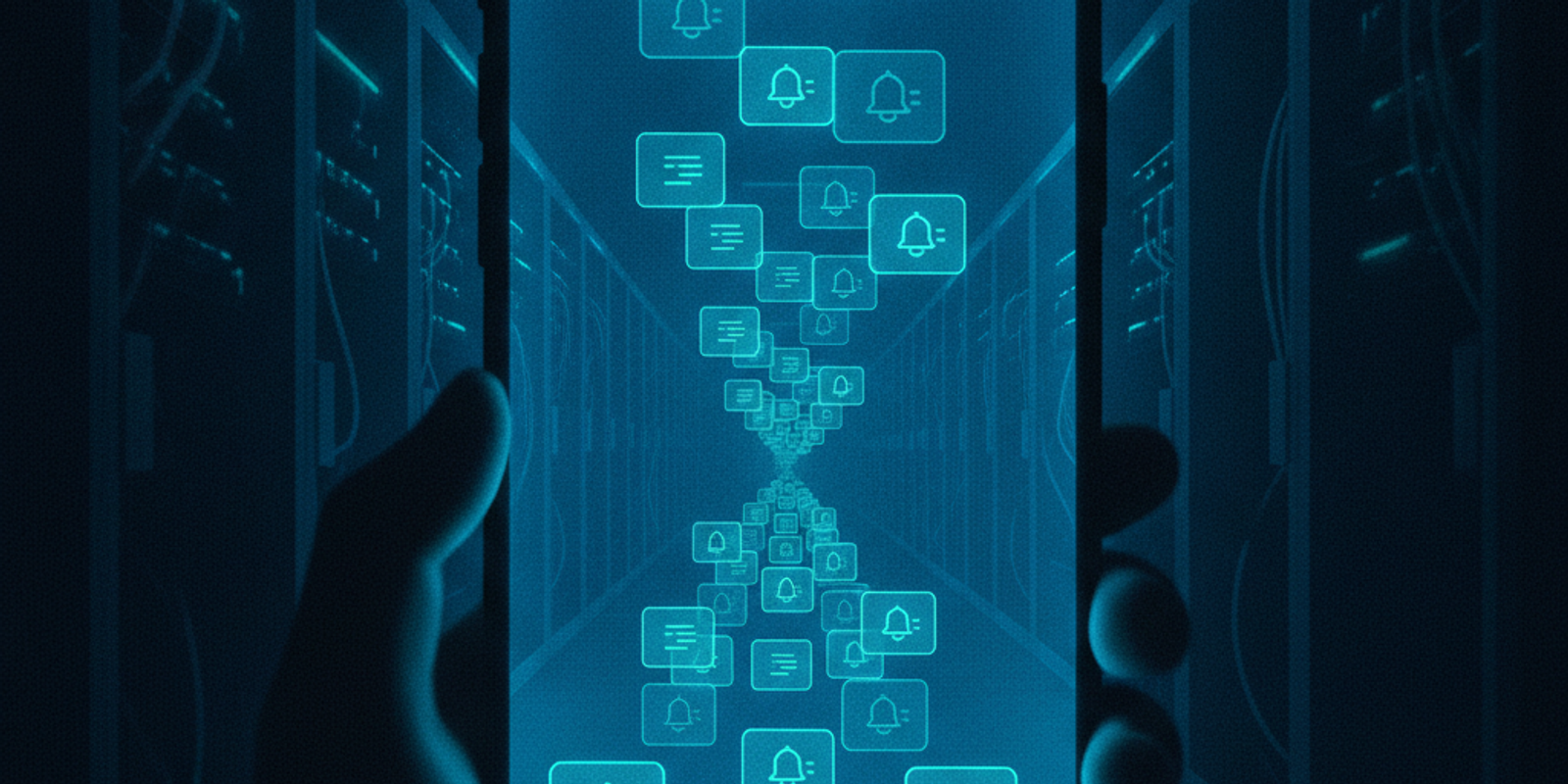
Armed with a valid username and password, the threat actor initiated a VPN login attempt. The infrastructure behaved exactly as designed and challenged the login attempt with a Duo push notification. The attacker obviously did not possess the physical phone of the contractor, so they could not tap the approval button. Instead, they wrote a script to trigger the authentication flow repeatedly, generating a relentless stream of push requests to the victim device.
The Pivot to Impersonation
After an hour of continuous buzzing, the attacker escalated their tactics. They located the WhatsApp number of the contractor and sent a direct message claiming to be from the Uber IT department. The message was brutally simple. It informed the victim that the endless stream of notifications was a known system error and would stop the moment they approved the pending login request. Exhausted, annoyed, and wanting to clear their screen, the contractor tapped approve.
That single tap granted the attacker a foothold on the internal network. From there, they scanned the intranet and located a network share containing a PowerShell script. This script was a catastrophic vulnerability on its own, containing hardcoded administrator credentials for the Thycotic Privileged Access Management platform. By dumping those secrets, the blast radius expanded instantly to encompass AWS environments, Google Workspace administrative consoles, and internal Slack channels.
The Mechanics of Notification Exhaustion
Human attention is a highly finite resource. When security architects configure an authentication system to send a simple push notification, they are relying on the end user to accurately parse the context of that prompt every single time it appears on their screen.
A script driving a continuous authentication loop completely removes the ability of the user to think critically. The phone vibrates constantly in their pocket. Legitimate work is interrupted. The cognitive load spikes drastically, creating an overwhelming psychological desire to clear the queue and make the noise stop. This physiological reality is exactly what makes the technique so devastatingly effective.
Exploiting the Default Trust Assumption
Most corporate users operate under the flawed assumption that if a highly secure IT system is sending them a notification, the system inherently knows what it is doing. They have been trained by years of poor corporate security culture to click accept on warnings just to access their inbox. The attacker weaponizes this training by generating a volume of prompts that transforms a primary security mechanism into a denial-of-service condition against the patience of the user.
The Architectural Blind Spot in Access Policies
The architectural failure in this incident is not that the user made a human mistake. The failure is that the identity provider allowed the prompt spam to happen in the first place without triggering a circuit breaker. Many organizations configure their access policies with a simple boolean logic gate that mandates multi-factor authentication for any remote login attempt, but fails to evaluate the context surrounding that attempt.
This flat policy design completely ignores behavioral context. It assumes all successful identity challenges are created equal, regardless of the velocity of failed attempts immediately preceding them. When a policy merely checks a compliance box for secondary authentication without evaluating the risk of the session, it leaves the perimeter wide open for brute-force push bombing.
A static multi-factor authentication requirement is merely a speed bump, not a wall. If your identity provider cannot distinguish between a routine morning login and a malicious authentication flood, your perimeter is fundamentally broken. — Security Architecture Maxim
Advanced policy design requires evaluating the session risk in real-time before the prompt is ever sent to the device. Security engineers must ask if the authentication is originating from an impossible travel location, or if it is coming from a known residential proxy network. If the system detects anomalous context, it should step up the requirement to a phishing-resistant factor or block the request entirely, rather than blindly firing off another notification.
Hunting the Anomaly in Identity Telemetry
The digital exhaust of an authentication flood is highly visible and incredibly noisy if your security operations center is actively monitoring the right tables. You do not need complex machine learning algorithms to spot this activity. You just need to aggregate your identity provider telemetry and establish a baseline for normal authentication failures.
In Microsoft Entra ID sign-in logs or Okta system logs, the pattern is entirely unmistakable. Analysts will see a high velocity of primary authentication successes followed immediately by continuous secondary step-up challenges that result in either a user denial or a system timeout.
EventID: 500121, Status: MFA Denied, UserPrincipalName: contractor@uber.com — followed by sixty identical log events within a fifteen-minute window, culminating in Status: MFA Approved.
Detection engineering teams must build correlation rules that trigger directly on the velocity of rejected or ignored prompts. A rule monitoring for five consecutive push timeouts or rejections within a ten-minute window should immediately generate a high-severity alert and automatically suspend the active sessions of the user. Waiting for the final successful approval event to appear in the logs is waiting too long.
Hardening the Authentication Architecture
Fixing this systemic vulnerability requires shifting the burden of security away from the exhausted end user and placing it back onto the system architecture. The most immediate and effective control an administrator can implement today is enforcing strict number matching for all authenticator applications across the enterprise.
Moving Beyond Asynchronous Prompts
Number matching breaks the asynchronous nature of the push approval process. The identity provider displays a two-digit code on the login screen, and the user must physically type that specific code into their mobile device to complete the challenge. If the attacker initiates the login from a proxy server in another country, the victim only sees the prompt on their phone but has no physical way to guess the code displayed on the screen of the attacker.
While number matching mitigates the immediate risk of an accidental approval, it does not stop the notification spam from occurring. To handle the sheer volume of malicious requests, administrators must implement strict rate-limiting on authentication attempts at the tenant level. If a user rejects three prompts in a row, the identity provider should lock the account for thirty minutes and force a mandatory IT helpdesk intervention to investigate the anomalous activity.
Ultimately, the enterprise must transition to phishing-resistant architectures utilizing FIDO2 security keys or device-bound passkeys as defined by RFC 8332. When you cryptographically bind the authentication material directly to a trusted hardware enclave, you completely eliminate the out-of-band push notification, closing the door on prompt bombing and notification fatigue permanently.
The takeaway
The Uber incident forced a long-overdue reckoning in the identity and access management space. It proved definitively that checking a compliance box for secondary authentication is entirely insufficient when attackers understand human psychology better than system administrators do.
Defenders must adopt an architecture that treats authentication as a continuous evaluation of risk rather than a static gate. Enforce strict number matching, aggressively rate-limit failed challenges, and demand verifiable device trust for all high-value access. For security operations teams looking to investigate complex identity telemetry alongside deeper forensic artifacts, a platform like MailSleuth.AI provides the visibility needed to correlate suspicious login patterns with the downstream malicious activity they generate. Stop letting threat actors weaponize your own security infrastructure against your people.
We dissect phishing campaigns and email infrastructure so you don't have to.


